
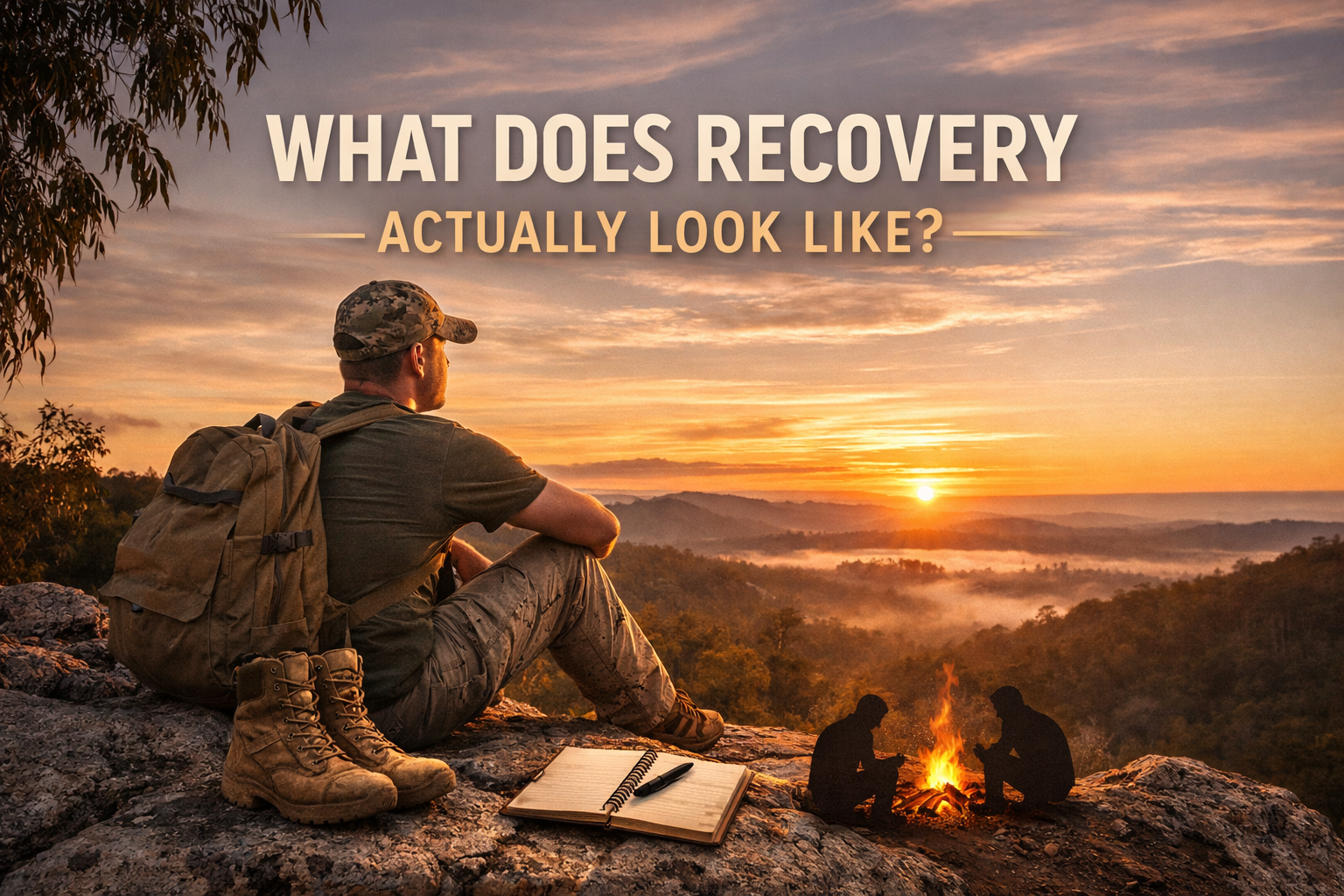
When people talk about recovery, they often imagine a clear turning point, a moment where everything shifts, symptoms disappear, and life feels “back to normal.” It’s an appealing image. Clean. Decisive. Finished.
But real recovery rarely looks like that.
For veterans and emergency services especially, recovery is not a return to who you were before service. Nor is it the erasure of difficult experiences. At Trojan’s Trek, we view recovery as a deliberate, structured process of rebuilding ones self across multiple domains of life, psychological, social, physical and existential. It is about restoring balance, strengthening capacity, and reclaiming purpose.
Recovery is not an endpoint. It is an ongoing recalibration.
Moving Beyond the Idea of Being “Broken”
Many individuals struggle with the concept of recovery because it can feel like an admission of weakness. Operational environments train you to endure, adapt, and push through. You were relied upon to function under pressure. That identity becomes part of your foundation.
When injury, whether psychological, phyiscal or spiritual, disrupts that functioning, it can feel like something essential has failed.
But recovery is not about fixing something that is broken.
It is about recognising that the body and nervous system have adapted to extraordinary circumstances. Hypervigilance, sleep disruption, emotional intensity, chronic pain, these are often signs of prolonged stress exposure, not personal inadequacy. Recovery is the intentional process of helping those systems rediscover flexibility and safety.
It is not about undoing the past. It is about integrating it in a way that allows you to move forward with strength.
It is Often Subtle
Unlike the dramatic portrayals we see in films, recovery is usually quiet.
It might look like attending an appointment you would have cancelled six months ago. It might look like going for a short walk instead of isolating. It might look like responding calmly in a situation that once triggered anger. Or just simply being present in a conversation.
These are not small steps.
They represent nervous system regulation. They represent growing capacity. They reflect the slow rebuilding of self-trust.
Wellness is rarely achieved through sudden breakthroughs. It is cultivated through consistent, repeatable behaviours that restore stability over time.
Psychological Recovery
Psychological recovery does not mean eliminating anxiety or never experiencing distress again. It means developing the skills to manage those experiences without being overwhelmed.
It involves understanding triggers, building emotional regulation strategies, reducing avoidance patterns, and gradually expanding tolerance to stress. It means shifting from constant survival mode to a state where there is flexibility and choice.
Instead of reacting automatically, you respond deliberately.
That shift, from reflexive survival to conscious engagement, is a key marker of recovery.
Social Recovery
One of the most overlooked elements of recovery is relational health.
Service environments foster deep bonds built on shared experience and trust. Transitioning away from that environment can create isolation that is difficult to articulate. Many veterans and first responders report feeling disconnected from civilian spaces or misunderstood by those who have not shared similar experiences.
Recovery may include rebuilding trust, strengthening communication skills, reconnecting with family, or finding new communities aligned with current values.
Connection is protective. However, it must feel authentic and psychologically safe. Community should support growth, not demand performance.
At Trojan’s Trek, structured peer connection plays a critical role in fostering sustainable recovery.
Identity and Purpose
Perhaps the most complex aspect of recovery is identity reconstruction.
When a role, uniform, or operational title has shaped your daily life for years, stepping away from it can feel destabilising. Recovery involves more than managing symptoms, it includes redefining who you are beyond service.
This may involve clarifying core values, identifying transferable strengths, exploring new vocational directions, and creating structure that supports long-term meaning.
Recovery is not returning to a previous version of yourself. It is building an integrated identity that honours past service while embracing future potential.
Physical Recovery
The body carries stress. Years of operational readiness, unpredictable schedules, physical strain, and heightened alertness leave measurable impacts.
Recovery at a physical level may involve structured rehabilitation, improved sleep hygiene, regulated movement, breathwork, and nutritional support. These are not superficial lifestyle changes; they are foundational interventions that influence mood, cognition, and resilience.
When the body begins to feel safer and more predictable, the mind follows.
Physical wellbeing is not separate from psychological recovery, it is intertwined with it.
Spiritual and Existential Recovery
Exposure to trauma often raises deeper questions about meaning, fairness, and purpose. Recovery must create space for these reflections.
Spiritual recovery does not require religious belief. It involves restoring a sense of coherence and direction. For some, this may emerge through nature, mentorship, service, reflective practice, or gratitude-based routines. For others, it may involve reconnecting with previously held beliefs or forming new ones.
When meaning is reconstructed, resilience strengthens. Purpose provides forward momentum.
What Recovery Is Not
Recovery is not linear.
There will be periods of progress and periods of setback. Increased stress may temporarily heighten symptoms. Difficult anniversaries or life events may reactivate old patterns.
This does not indicate failure. It reflects the ongoing process of nervous system learning.
Progress is measured over months and years, not individual days.
So, What Does Recovery Actually Look Like?
Recovery may look like:
- Improved sleep compared to six months ago
- Fewer reactive episodes than last year
- Increased clarity about what matters
- Greater tolerance for discomfort
- Renewed willingness to plan for the future
- A growing sense of cautious optimism
Recovery looks like strengthened capacity.
It looks like consistency replacing chaos.
It looks like someone who has experienced significant challenge choosing to re-engage with life, deliberately and sustainably.
At Trojan’s Trek, recovery is not defined by symptom elimination. It is defined by a restored sense in ones self and your wellbeing.
It is the steady rebuilding of emotional regulation, identity clarity, physical health, connection, and purpose. It is a process grounded in structure, support, and evidence-informed practice.
Most importantly, recovery is not about going back.
It is about moving forward, with strength, awareness, and renewed direction.
